
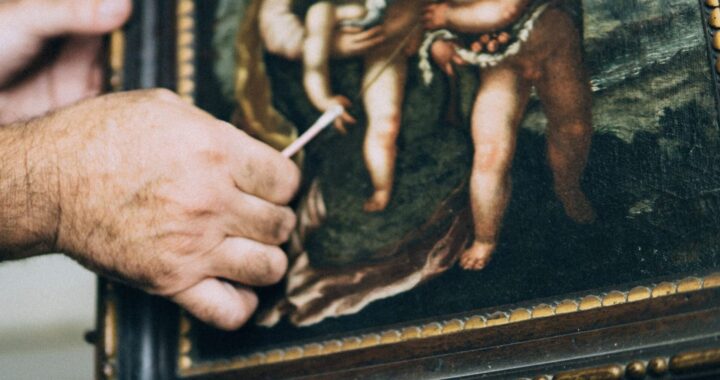
And how to protect your collections from them
Thank you to our colleagues at The American Institute for Conservation & Foundation for Advancement in Conservation for publishing this valuable information.
Nothing lasts forever. Even the most outwardly sturdy objects are vulnerable to damage and time.
Through conservation and preservation, we can prolong the lifespan of an object, but there are specific “Agents of Deterioration” that pose risks to treasured items. By learning about these 10 Agents, you can better protect the things that matter to you! Recognizing the Agents will also help you understand the challenges that conservators face when caring for our cultural heritage.
The Agents of Deterioration:
1. Physical Force
Think big: earthquakes! or small: dropping a vase. This Agent causes fast and catastrophic consequences through natural disasters and human error, or slow-but-steady damage through improper handling or vibrations from nearby construction.
2. Thieves, Vandals, Displacers
Not just for the Louvre! This Agent includes planned thefts, opportunistic thefts, embezzlement, and vandalism. While we often hear about museums being targeted by robbers, you should protect objects at home, too. Burglar alarms and cameras are good deterrents.
3. Fire
This Agent is fast and dangerous. Fire can cause quick and catastrophic loss, both at home and at museums, libraries, and archives. This could be through faulty wiring or neglected candles, stoves and ovens, or part of a larger emergency like a wildfire. It’s a good idea to install gas shut-off device (Little Firefighter is a popular one)
4. Water
Check your plumbing. This Agent lurks in attic or basement spaces, which are frequently used to store precious items. These areas are most vulnerable to water damage in the event of a roof or plumbing leak, sprinkler system malfunction, or flooding. Install a flow-based water-leak detection and shut-off device (some popular ones include Flo Smart by Moen or FloLogic). Sometimes Fire and Water work together to cause damage.
5. Pests
Tiny terrors! These Agents are everywhere. Both rodents and insects can be pests to your collections. Some also consider mold, mildew, and fungi to fall under this category. Frequently check for activity where you display or store items, whether a tiny silverfish or family of raccoons.
6. Pollutants
Clean your filters. This Agent can be found both outside and inside buildings. Many pollutants known to cause human health problems can also cause damage to objects. These can be airborne or transferred by direct contact.
7. Light
Watch out for this Agent. Damage from light is cumulative and, once sustained, irreversible. Think about ways you can reduce light exposure, especially for vulnerable objects like photographs, art on paper, paintings, and textiles. If it’s impossible to avoid harsh light, an option is make a copy for display, then safely store the original.
8. Incorrect Temperature
Running hot and cold? Temperature extremes can lead to slow deterioration that can be hard to notice at first. This Agent can also damage through strong fluctuations in temperature—try to maintain a steady, consistent environment.
9. Incorrect Relative Humidity
Keep it steady. Organic materials all contain moisture; they absorb and give off moisture and try to find a balance between their moisture content and that in the air around them. Sudden, large, and frequent relative humidity fluctuations can cause shrinkage, warping, splitting, and general aging of objects made of organic materials like wood or cause condensation and corrosion on metal objects. This Agent loves a home without heat or air conditioning!
10. Custodial Neglect & Dissociation
Pay attention! Custodial neglect can occur when active care is not taken to preserve objects or when information on care is not current. Disassociation of records or information about objects can make it more difficult to care for items. This Agent is hoping you’ll be forgetful.
Useful Links: https://artsandculture.google.com/story/managing-risks-what-are-the-agents-of-deterioration-trinity-college-dublin-library/-AWxBVnbqWmqLw?hl=en