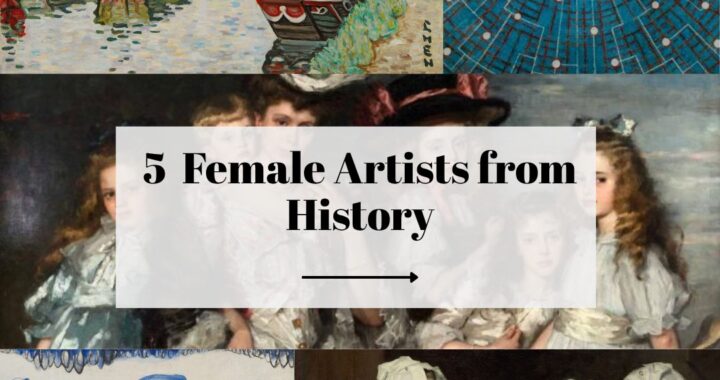
Art history is often told through a familiar canon—but beyond the names we hear most often lies a deeper, more expansive story. Many women artists have made extraordinary contributions across centuries, though their work has not always received the recognition it deserves. Below, we highlight five lesser-known female artists whose practices span continents, mediums, and movements—each offering a distinct and meaningful voice within the history of art.
Michaelina Wautier (1604–1689)
A painter of the Southern Netherlands during the Baroque period, Michaelina Wautier was long overlooked in art history. Her works were frequently misattributed to male artists until as recently as the 21st century. Wautier’s paintings demonstrate remarkable technical skill and versatility, ranging from portraiture to large-scale historical compositions. Her ability to render anatomy, fabric, and expression with precision set her apart from many of her contemporaries. Today, her rediscovery has reshaped understanding of women’s roles in Baroque painting, positioning her as a significant figure whose contributions were unjustly obscured for centuries.
Erna Rosenstein (1913–2004)
Erna Rosenstein was a Polish-Jewish surrealist painter, poet, and Holocaust survivor whose work is deeply tied to memory, trauma, and the subconscious. Living through the devastation of World War II profoundly influenced her practice, and her work can be understood as an ongoing process of witnessing and processing trauma. Rosenstein’s art stands as a powerful example of how surrealism extended beyond aesthetics into a deeply personal and psychological mode of expression.
Georgette Chen (1906–1993)
Georgette Chen was a pioneering modernist painter whose life and work bridged cultures and continents. Born in China, educated in Paris and New York, and later based in Singapore, Chen developed a unique artistic voice that blended Western modernist techniques with Chinese painting traditions. Her subjects include still lifes, landscapes, and intimate scenes of daily life, which are rendered with a quiet sensitivity and refined use of color and composition. As one of Singapore’s most important artists, Chen played a key role in shaping the region’s modern art movement, offering a perspective that reflects both global influence and local identity.
Menhat Helmy (1925–2004)
Menhat Helmy was a leading figure in Egyptian modernism and one of the first Egyptian artists to gain international recognition for printmaking. Her work often depicts scenes of everyday life, particularly the working class in mid-20th-century Egypt, through simplified forms and structured compositions. Helmy’s practice is notable for its balance of abstraction and figuration, as well as its focus on social realities. At a time when global attention on modern art was largely centered in Europe and the United States, Helmy contributed to a broader understanding of modernism as a truly international movement.
Thérèse Schwartze (1851–1918)
Thérèse Schwartze was a highly accomplished Dutch portraitist known for her elegant depictions of high society in late 19th-century Amsterdam. Trained in both the Netherlands and abroad, Schwartze built a successful career painting members of the elite, capturing her subjects with both technical mastery and psychological nuance. Her work reflects the refinement and formality of her era while also conveying individuality and presence. Despite her success during her lifetime, her name is less widely recognized today, yet her portraits remain an important part of European art history.